
Kidney stones are common and often very painful — but the good news is that most stones can be treated safely, and many pass naturally. The right treatment depends on the stone's size, location, and whether it causes blockage or infection.
This complete guide explains what kidney stones are, why they form, how they're diagnosed, the treatment options available, and the strategies that help prevent recurrence.
What are kidney stones?
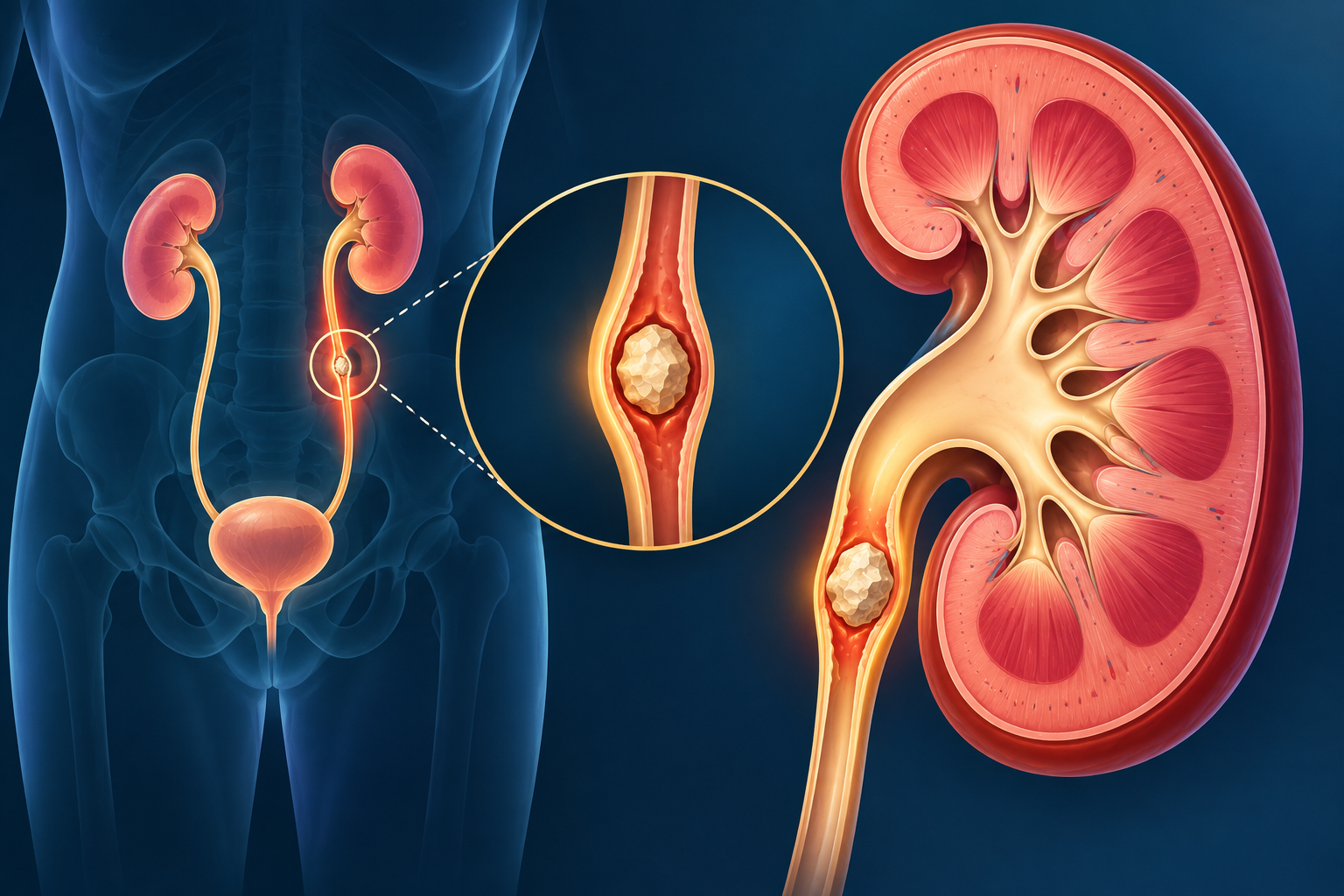
Kidney stones form when minerals in urine become concentrated and crystallize — similar to salt left behind when salty water dries. Stones may stay in the kidney or move into the ureter, where they often cause severe pain.
Causes & risk factors
- Low fluid intake — dehydration is a major factor in hot climates like India.
- High salt consumption — raises calcium in urine.
- Obesity and metabolic disorders.
- Family history of stones.
- Repeated urinary infections.
- Certain bowel diseases or medications.
- Abnormal calcium or uric acid levels.
- Genetic or hormonal conditions.
Types of kidney stones
Calcium Stones
Most common type — usually calcium oxalate.
Uric Acid Stones
Linked to acidic urine, obesity, and metabolic issues.
Struvite Stones
Infection-related; can grow large quickly.
Cystine Stones
Rare — caused by inherited cystinuria.
Symptoms
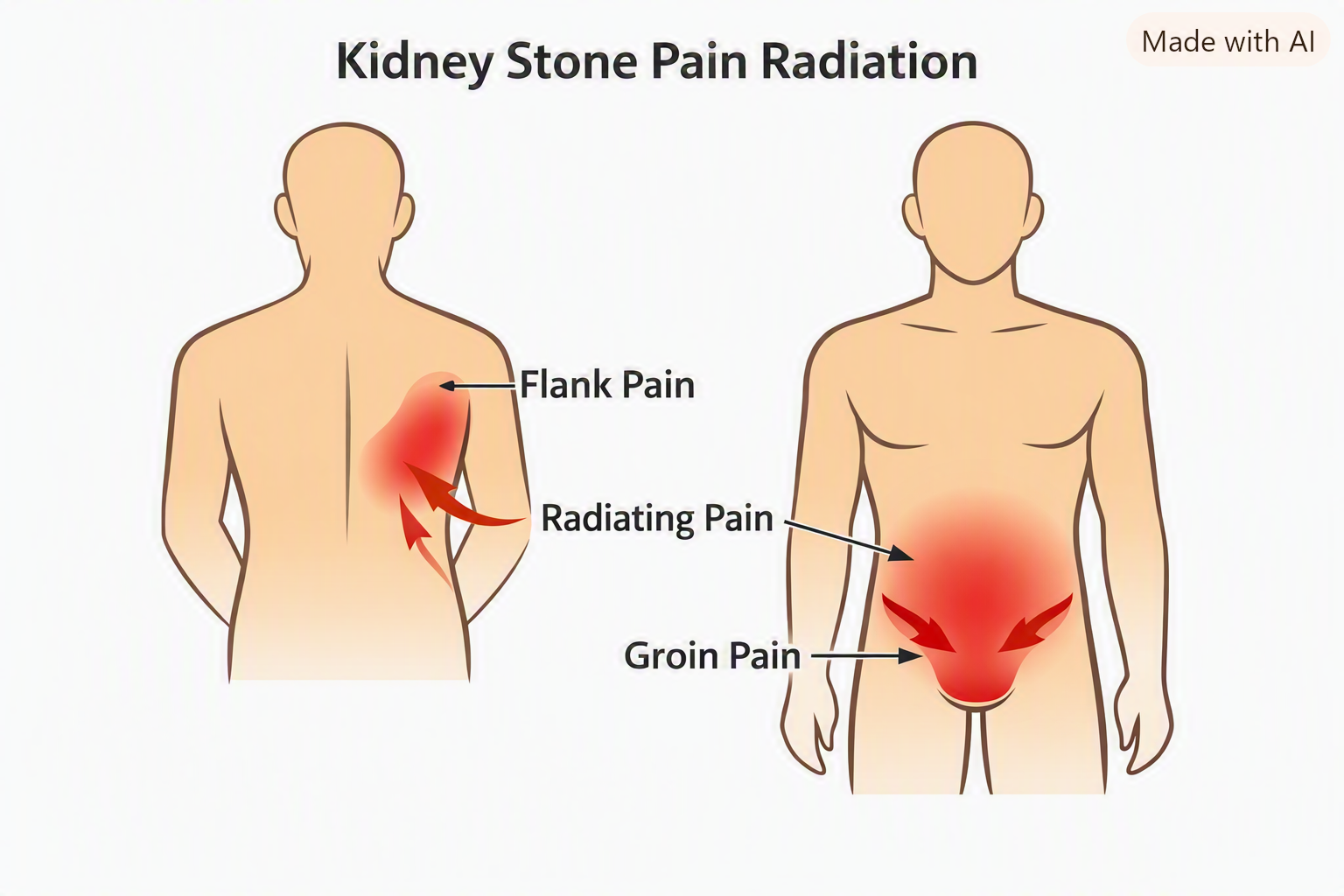
- Sudden, severe pain in the side or back (renal colic).
- Pain radiating to the abdomen, groin, or testicle.
- Nausea and vomiting.
- Burning or frequent urination.
- Blood in urine (pink, red, or brown).
When to seek emergency care
Kidney stones can be dangerous if accompanied by any of the following:
Fever or Chills
Suggests infection in a blocked kidney.
Severe, Unrelenting Pain
Pain that won't ease with medication.
Persistent Vomiting
Prevents fluids and medicines from staying down.
Little or No Urine
Sign of significant obstruction.
- Weakness or illness out of proportion to the pain.
- A single functioning kidney with suspected blockage.
Blocked, infected kidneys are medical emergencies requiring immediate drainage. Do not wait — go to the nearest emergency department.
Diagnosis
Urine Tests
Detect blood, infection, and crystals.
Blood Tests
Assess kidney function, calcium, and uric acid levels.
Ultrasound
Radiation-free; shows stones and any blockage.
CT Scan (Non-Contrast)
The most accurate test for size, location, and obstruction.
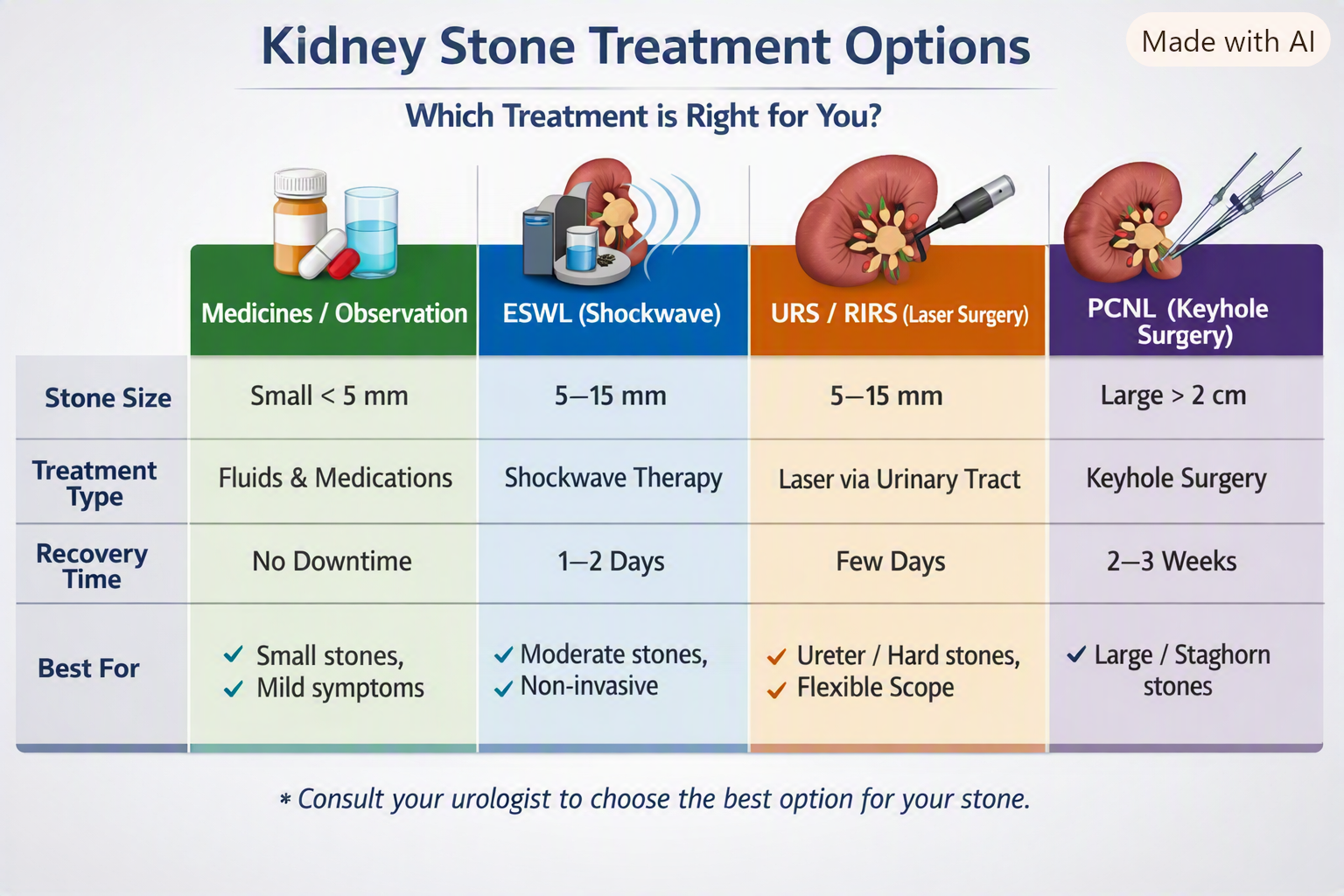
Treatment options
Not every stone needs surgery. Management depends on size, symptoms, and complications.
Observation & Medicines
Pain relief, hydration, and ureter-relaxing drugs.
ESWL (Shock Wave Therapy)
Breaks stones into smaller pieces externally.
URS (Ureteroscopy)
Thin scope removes or lasers stones — no external cut.
RIRS (Flexible Laser Surgery)
Scope into the kidney; laser breaks stones.
PCNL (Keyhole Surgery)
Small incision in the back for larger or complex stones.
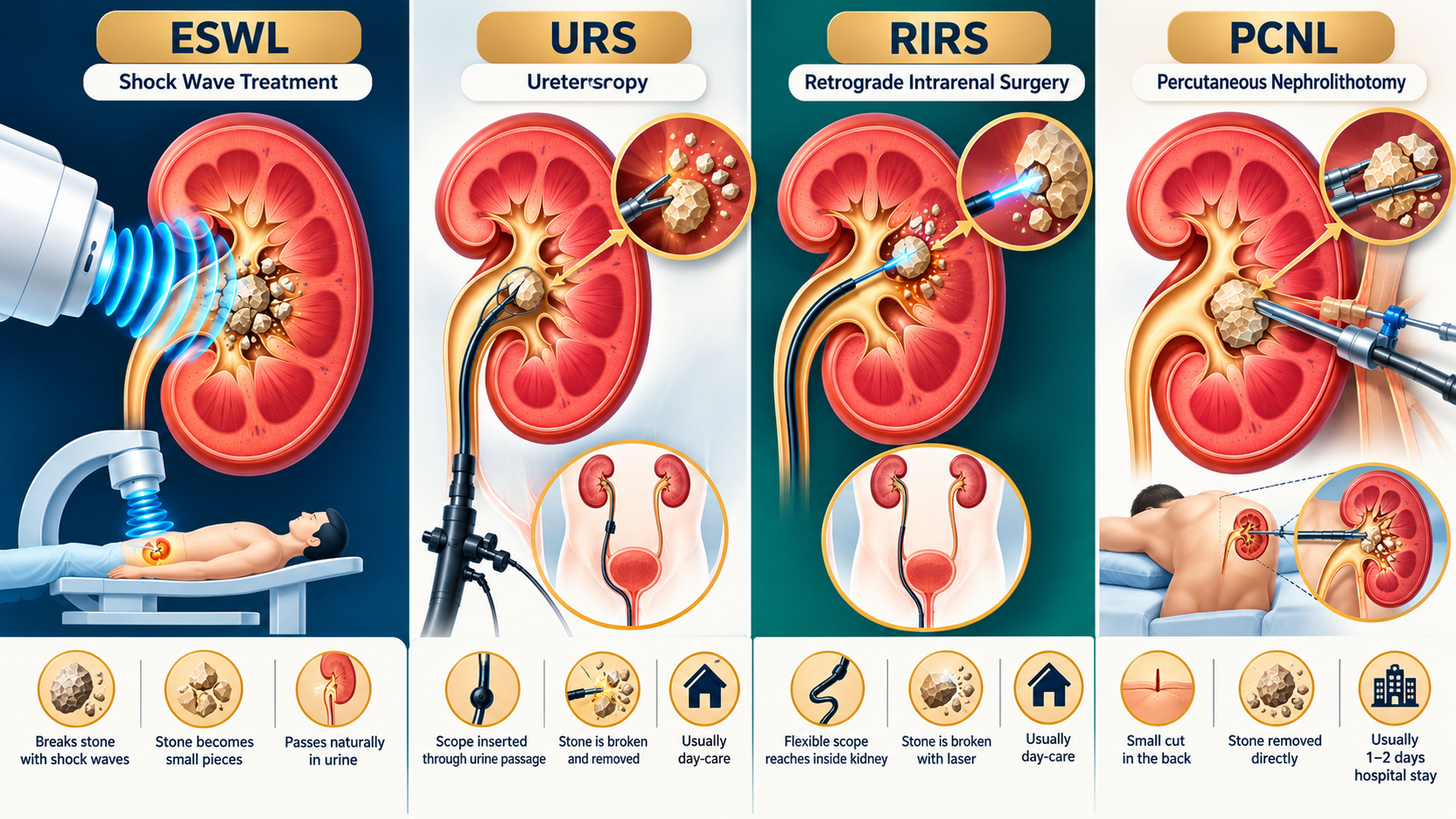
There is no single "best" surgery — the choice depends on stone size, location, hardness, kidney anatomy, infection, and patient health.
Prevention tips
Stay Hydrated
Aim for pale urine — roughly 2.5–3 litres per day.
Limit Salt
Avoid hidden salt in packaged foods, pickles, and sauces.
Normal Calcium Intake
Don't cut dairy without medical advice.
Balanced Diet
Fruits, vegetables, moderate protein, sustainable habits.
- Metabolic evaluation — recurrent stones may need 24-hour urine testing.
Common myths
Beer does not flush stones — alcohol may worsen dehydration.
- No pain ≠ no problem. Silent stones can damage kidneys.
- Not every stone needs surgery.
- Calcium stones don't mean cutting milk and curd.
- Pain relief doesn't always mean the stone has passed.
Frequently Asked Questions
Days to weeks, depending on the stone's size and location. Smaller stones lower in the ureter tend to pass faster, while larger or higher stones may need medical intervention.
Yes. If a stone causes persistent obstruction or infection, it can damage the kidney over time — even if the pain is mild or absent.
Rare, but possible with severe or prolonged obstruction — especially in a single functioning kidney or with untreated infection.
Often yes, unless you have active pain, infection, or a stone causing significant obstruction. Always confirm with your urologist.
Enough to keep your urine light-coloured — typically around 2.5 to 3 litres per day, more in hot climates like India.
A urologist — the specialist who diagnoses and treats kidney stones, including medical management and surgical procedures.
Conclusion
Kidney stones are painful but treatable. Not every stone needs surgery, and not every stone should be ignored. The right treatment depends on stone size, location, symptoms, and kidney function. Prevention is key to avoiding recurrence.
Experiencing symptoms of kidney stones?
Consult a qualified urologist promptly. Early diagnosis and treatment can prevent complications and protect kidney health.
📍 Medanta Super Speciality Hospital, Lucknow — 2nd Floor OPD, B-Wing, Room 33.
🕘 Mon–Sat, 9:00 AM – 5:00 PM.
Related Articles
Kidney Stone Pain: Symptoms & Warning Signs
What renal colic really feels like, and when you must reach a hospital.
Kidney Stone Treatment: A Complete Guide
Medicine, ESWL, URS, RIRS or PCNL — which one do you actually need?