
Few things frighten a patient more than looking into the toilet and seeing red colour. Some people rush to a doctor the same evening.
Seeing blood in your urine is scary. It can happen once and stop — but the reason may still be there. Blood in the urine is a sign that something in the kidneys, ureters, bladder or prostate needs a check. Even if the urine looks normal later, you should get it checked.
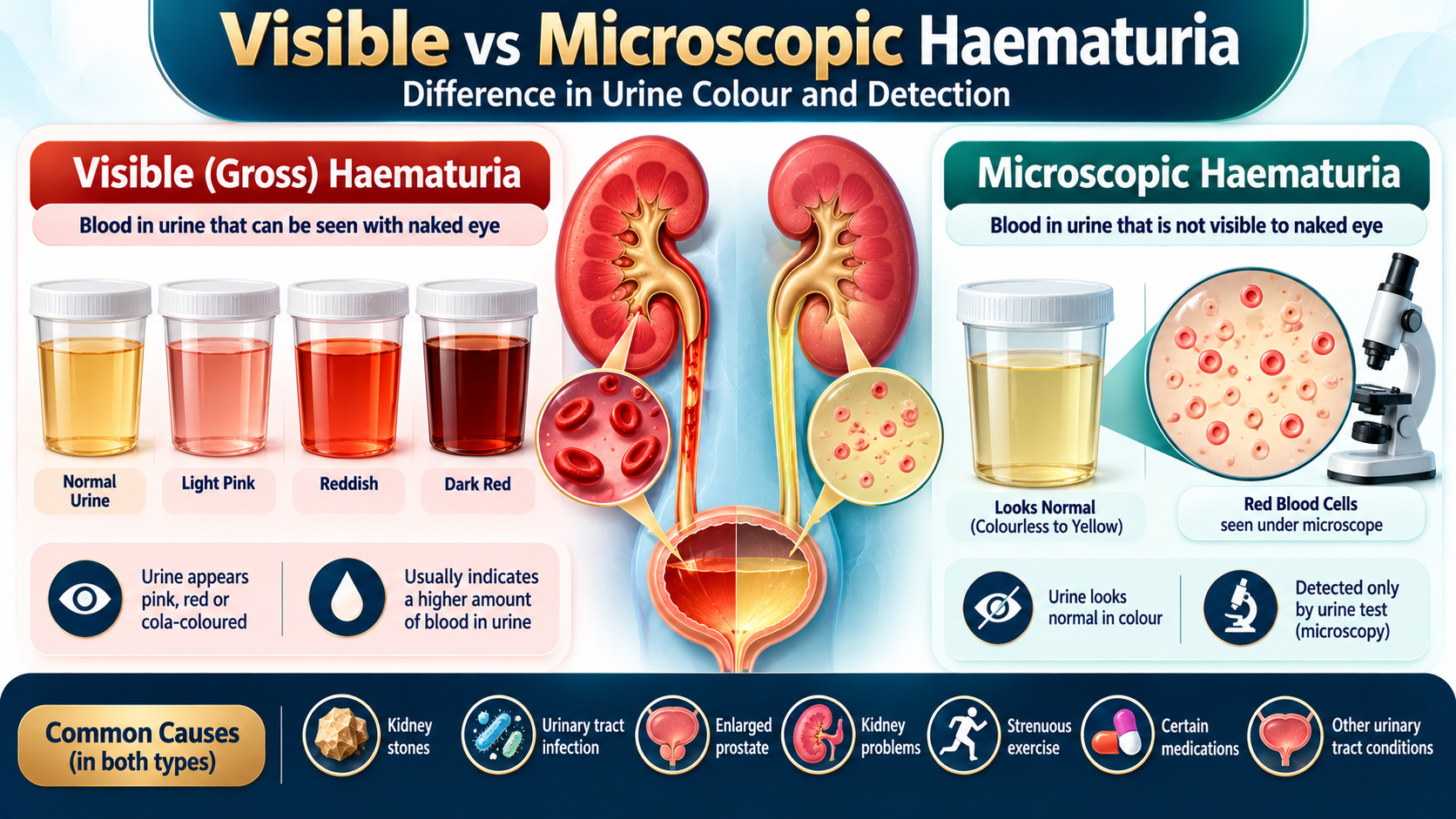
Two kinds of blood in urine
Visible Blood
Gross haematuria — the urine looks pink, red, tea-coloured or cola-coloured. You can see it without tests.
Microscopic Blood
Microscopic haematuria — the urine looks normal but lab tests find red blood cells.
Microscopic haematuria usually means three or more red blood cells per high-power field on a microscope slide. Both kinds need attention, especially in older people or smokers.
When red urine is not blood
Not all red or dark urine is from bleeding. Common harmless causes:
- Foods like beetroot or blackberries.
- Food colouring in drinks or sweets.
- Some medicines such as rifampicin or phenazopyridine.
- Menstrual blood mixing with the sample in women.
- Very concentrated urine from dehydration.
A serious lookalike is muscle pigment after a bad injury or extreme exercise. The dipstick test for blood may be positive but the microscope shows no red cells. This can harm the kidneys and needs urgent care.
A simple urine test usually tells the difference in a few hours. Do not try to decide at home.
Common causes
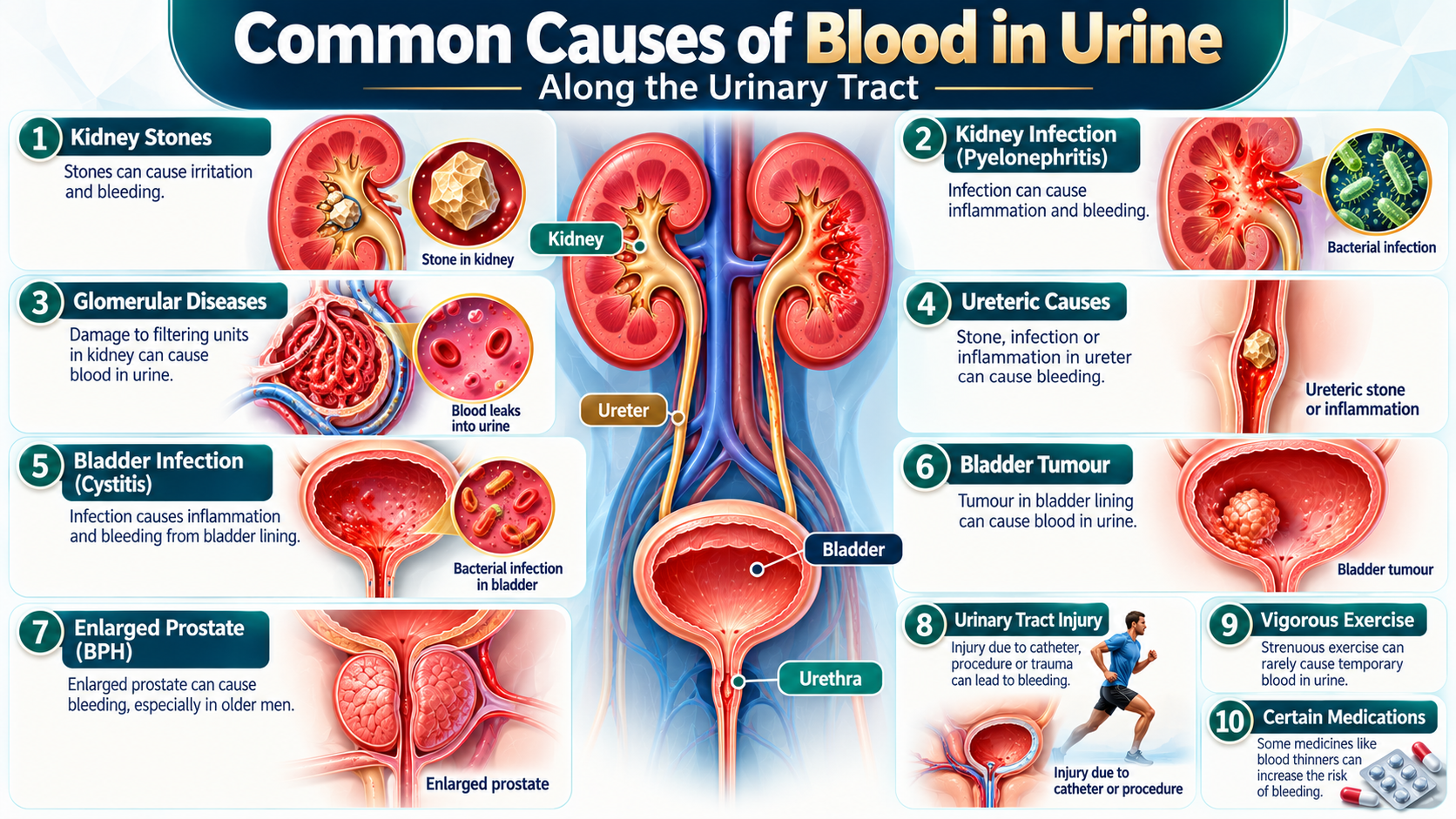
Urinary Tract Infection (UTI)
Common, especially in women.
Symptoms: burning, frequent need to pass urine, urgency, lower belly pain. Kidney infection causes high fever and back pain.
Stones
Stones can scratch the lining as they move.
Typical sign: sudden severe flank pain that moves to the groin, often with nausea. Some stones bleed with little pain.
Enlarged Prostate (BPH)
In men over 50, the prostate can bleed.
Symptoms: weak stream, trouble starting, dribbling, and waking at night to urinate.
Cancers
Bladder, kidney, ureter or prostate cancer can cause painless, on-and-off bleeding. Smoking raises the risk.
Kidney Filter Disease
Conditions like glomerulonephritis make urine look like cola or strong tea and often cause protein in urine, swelling and high blood pressure. These are treated by a nephrologist.
Injury, Procedures and Blood Thinners
Trauma, catheters, recent surgery, pelvic radiation or blood thinners can cause bleeding. Being on blood thinners does not rule out other causes.
When to get emergency help
- Painful, swollen lower belly and cannot pass urine.
- Passing blood clots.
- High fever with chills and back or flank pain.
- Dizziness, weakness, breathlessness or fainting.
- Heavy continuous bleeding.
See a urologist within a few days if you:
- Saw visible blood even once — especially if painless.
- Are over 40 or a current or former smoker.
- Worked with dyes, rubber, paint, leather or solvents.
- Had a past bladder or kidney tumour, pelvic radiation, or certain chemotherapy.
- Have weight loss, a lump in the belly, or ongoing back pain.
Tests your doctor may order
Not everyone needs every test. Your doctor will choose tests based on your age, smoking history and whether the blood was visible.
Urine Routine & Microscopy
Confirms red blood cells; checks for protein or pus.
Urine Culture
Finds infection and the right antibiotic.
Blood Tests
Kidney function, haemoglobin, clotting. PSA may be done in some men.
Ultrasound
First scan for stones, swelling or large bladder growths. No radiation.
CT Urography
Detailed CT with contrast to map the whole urinary tract. Used for visible bleeding or higher cancer risk.
Cystoscopy
Thin flexible scope into the bladder after numbing gel. 5–10 minutes. Mild burning for a day is common.
Urine Cytology & Tumour Markers
Used in selected cases to help decide on cystoscopy.
A normal ultrasound does not always rule out a bladder tumour . Small or flat tumours may show only on cystoscopy.
Treatment
Treatment depends on the cause, not the bleeding itself.
Infection
Antibiotics based on culture, then repeat urine test.
Stones
Small stones may pass with fluids and medicine. Larger stones may need ESWL, ureteroscopy/laser, or PCNL.
Enlarged Prostate
Medicines often help. If bleeding continues, procedures like TURP or laser surgery may be needed.
Bladder Tumour
Removed by endoscopy (TURBT) and examined. Further treatment depends on stage and grade.
Kidney Tumour
Surgery to remove the tumour while saving kidney tissue. Many are done by keyhole or robotic surgery.
Kidney Filter Disease
Managed by a nephrologist with medicines to control blood pressure and protein loss.
Four things not to do
1. Do not wait for it to happen again.
The cause may still be there.
2. Do not take antibiotics on a chemist's advice.
This can hide infection and delay diagnosis.
3. Do not stop blood thinners on your own.
Talk to the doctor who prescribed them.
4. Do not skip a cystoscopy just because a scan was normal.
Small or flat tumours may only show up on cystoscopy.
How to lower your risk
Stop Smoking
This helps your bladder most of all.
Drink Enough Water
Keep urine pale yellow — unless your doctor limits fluids.
Treat Stones & Infections Fully
Partial treatment can cause repeat problems.
Control BP & Sugar
Protects your kidneys long-term.
Use Protection at Work
If you work with chemicals, dyes, or solvents.
Attend Follow-up Cystoscopy
If you had a bladder tumour.
Frequently Asked Questions
Yes, the bleeding often stops — but the cause may still be there. Any episode that stops by itself should still be checked.
Yes. Pain usually means infection or a stone. Painless bleeding, especially in people over 40 or smokers, can be a sign of cancer and needs careful testing.
No. Most people have infection, stones or prostate problems. Cancer is less common. Tests find who needs treatment.
It is usually uncomfortable but not very painful. Numbing gel is used and you go home the same day. Mild burning for a day is normal.
Yes. Long or hard exercise can cause brief bleeding that clears in a few days. Doctors only call this exercise-related haematuria after other causes are ruled out.
Do not ignore it. Microscopic blood needs a proper check based on your age and risk factors.
Start with a urologist. If tests show kidney filter disease, you may be referred to a nephrologist.
Bottom line
Blood in the urine is common. Often the cause is an infection, a stone or prostate enlargement. But some causes need quick treatment. A proper check-up will either reassure you or find a problem early when it is easier to treat. Waiting gives no benefit.
Saw blood in your urine?
Don't wait for it to happen again. Book a consultation with Dr. Manish Khattar at Medanta Lucknow — bring your reports and get a clear diagnosis.
📍 Medanta Super Speciality Hospital, Lucknow — 2nd Floor OPD, B-Wing, Room 33.
🕘 Mon–Sat, 9:00 AM – 5:00 PM.
Related Articles
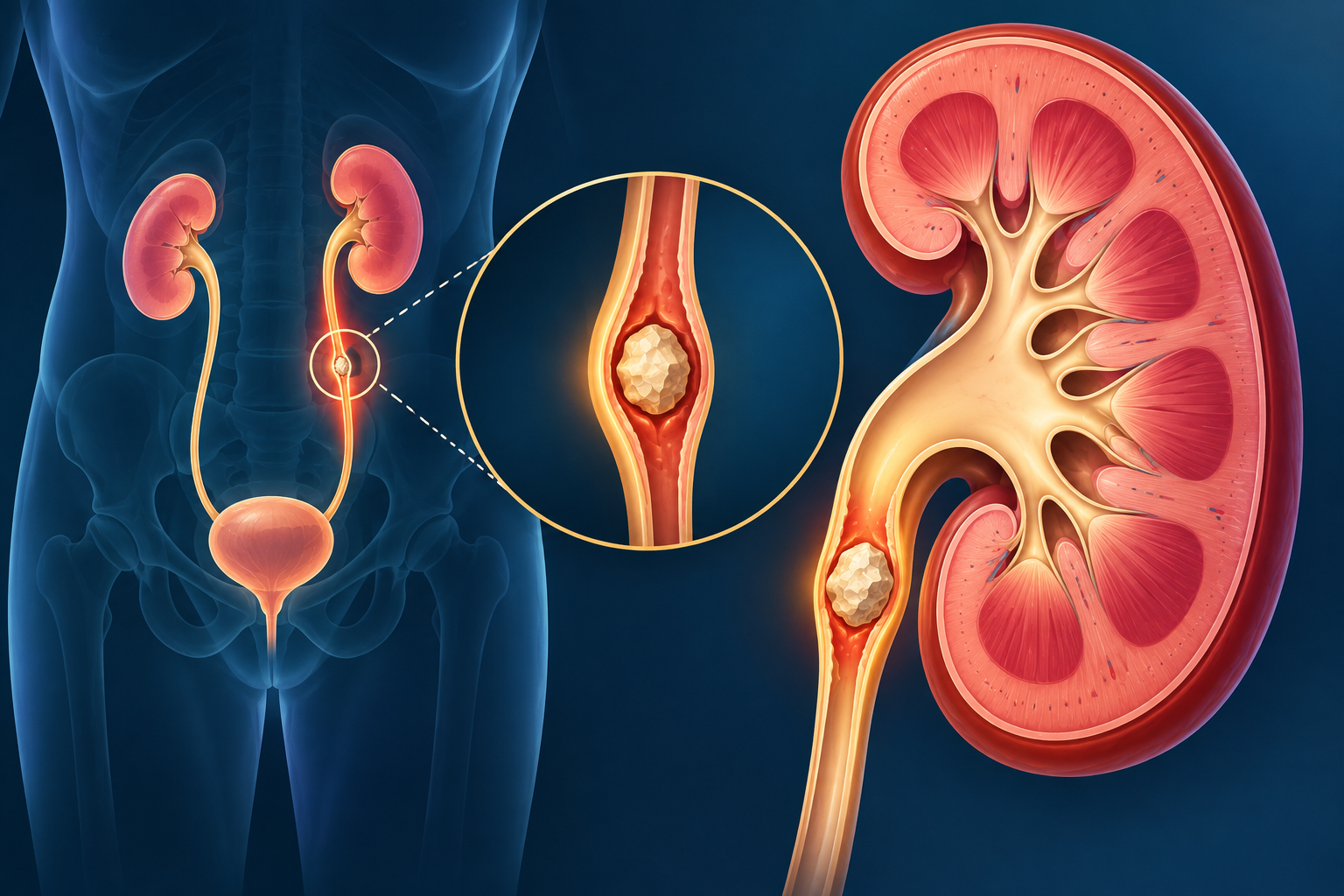
Kidney Stones: Symptoms, Causes, Treatment & Prevention
The complete guide — types, diagnosis, treatment options and prevention.
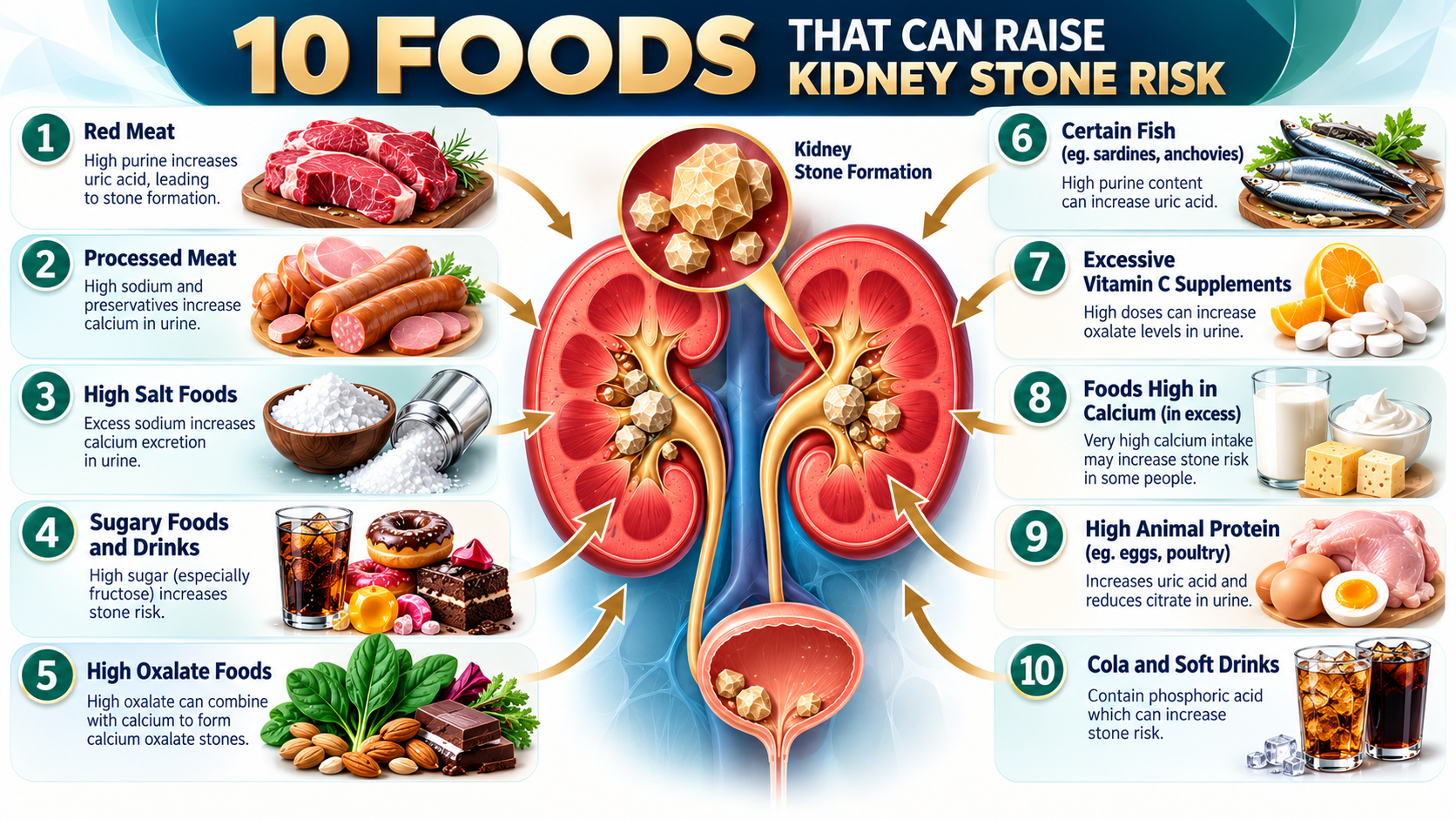
10 Foods That Can Raise Your Risk of Kidney Stones
Spinach, beetroot, nuts, tea, salt, colas — and why dairy stays on the plate.
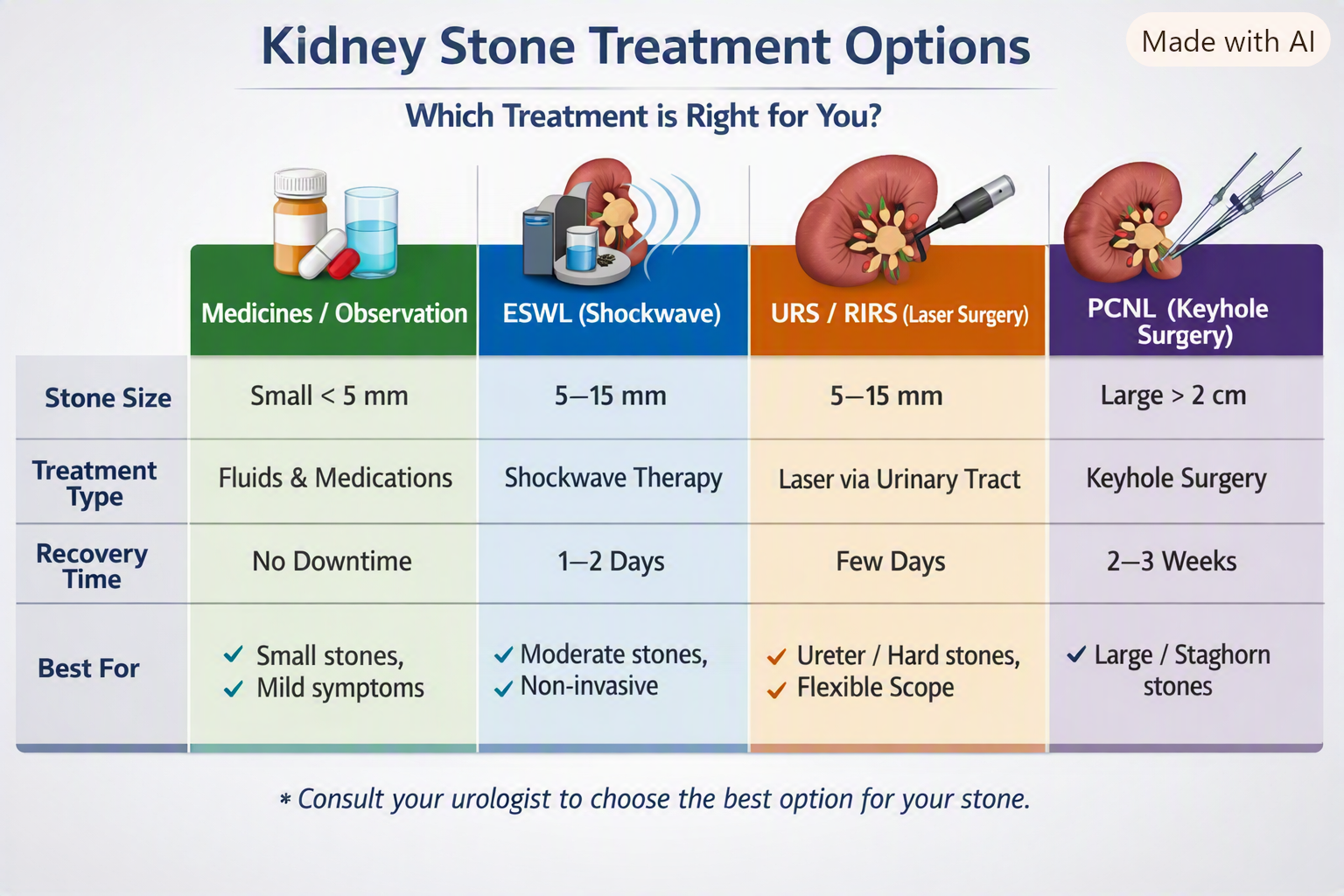
Kidney Stone Treatment: A Complete Guide
Medicine, ESWL, URS, RIRS or PCNL — which one do you actually need?